Showing posts with label food production. Show all posts

Thursday, December 10, 2015

Things You Can Do Now To Prep for Next Growing Season


Here in the northern hemisphere we are still not officially in winter. Even though there is a good bit of time before spring, I am already thinking about what we will add and grow next year. There are several things that we can do to improve our next harvest and increase our long-term food sovereignty.

Listen and subscribe on iTunes or Stitcher.


Cleaning up the garden bed


After the growing season has ended there is some cleanup that has to be done. Plants that have played out need to be removed. They can simply be cut off even with the ground. This will leave the roots in the ground that when they rot will add to the soil's structure. The vines and stems that have been removed can either be composted, shredded and used as a component in mulch or burned. 
The only time you shouldn't leave plants anywhere near your growing area is if the plants are diseased. If plants are diseased they should be pulled up roots and all and disposed of either in the garbage or by burning.

This is also the perfect time to remove tomato cages and stakes. Tomato cages may need to be cleaned and stacked up somewhere so they will last longer. Leaving wire cages in the ground will make them rust faster and shorten their usable lives considerably. The same is true for wooden or bamboo stakes. Simply by removing them from the ground and placing them somewhere out to the weather their lifespan is extended. While removing the infrastructure you will want to inspect each component. You may find that some of the pieces will need to be replaced. 
If you need to add to your garden infrastructure this is a good time to do so. You can find tomato cages and/or stakes an nearly everything else through either the yard sale pages on social media or through Craig's list. Now is the perfect time to look for bee boxes, garden tools, and really any type of equipment. Some people try gardening for the first time and decide that it is not for them. Other people will sell unused or unneeded equipment or supplies to help them pay for the holiday season.


Planning

It may seem early, but it isn't. For me this is the time of year where I think about how everything produced. What varieties did well, what didn't? For the varieties that didn't do well, is there something I could have done to give them a better opportunity to grow? Were they in the wrong place? Did these varieties get enough sunlight or water? 

Now is also the perfect time to think about whether or not you wish to expand or reduce your growing area. If you are planning on adding growing beds, where will you put them? What size will they be? What will you put in them? If you are going to be adding raised beds, doing so now will allow them time to get settled. If you are planning on adding garden space in the ground you can lay them out and begin preparation. 

How would I prep an in ground garden bed for next season? By starting now you can save yourself a lot of hard work next season. Placing plastic or tarps over the area where you are planning on planting next year will help you a lot. This will cause many of the weed and grass seeds to germinate and die throughout the season. This will reduce that amount of weeding that will be necessary next year. This is especially helpful if you are planning on working with a no till system. 

Now is also the time you can order your seed and nursery catalogs. To any hardcore gardener a seed or nursery catalog is as good as the old Sears Wish Book. I may be dating myself a little there. You can check out new varieties of fruits and veggies and see what you might want to try next season. Here is the link to request White Harvest's Catalog. 

Mulching

Last year I moved completely to no till gardening and I was very pleased with the results. Now is when I will be mulching the garden bed heavily. This is also a time of year when there is plenty of resources available to do the job. Fallen leaves make a great mulch and will gradually improve the soil as well. Mulched leaves are best, but just raking leaves and piling them in your garden spot will still help. Whole leaves should be piled 8 to 12 inches deep across your entire garden bed. Ground leaves should be about 4 inches deep. This will inhibit winter weed growth and will be a good base for your spring garden. These leaves will breakdown slowly. As it rains and snows then melts nutrients will slowly leach out of the leaves and into the soil. Doing this alone will improve the quality of your soil. This is especially important for people with heavy clay or sandy soil. The addition of organic matter will move both of these more toward the center and a much more fertile growing environment.

This is also a perfect time for a side business. People everywhere are trying to get rid of this very useful resource. If you live in or are close to an urban, suburban, or even semi rural area there are plenty of people who will pay to have their leaves removed. There will be a few that will want the leaves moved from their yard to their garden, but very few. With a little determination and a blower/vac/mulcher ,a teen or really anyone can turn this into a decent supplemental income. Just think, you could be being paid to obtain a resource that you want. 

What do you need to start this kind of seasonal business? Well, that depends on your area. There are some places that in order to do this you will have to have a business license. I will admit that drives me crazy. The government has to have their hand in everything it can get. Other areas all you have to do is have transportation, a rake and garbage bags or a mulcher. Place some fliers around and it won't take long before you are in business. You might even want to work an elderly neighbors yard for free in exchange for them telling their friends about your service. This can be not only good advertising, but also a good service to your community.


Planting Bare Root Trees


Winter is the best time to plant bare root trees as long as your soil isn't frozen. Bare root trees are bought when the trees are dormant. This means you don't have to be as careful with them. Bare root trees are typically less expensive than potted trees. These trees are normally available December through February. I have found that there is a larger selection of trees available as bare root. I think this may be because shipping is much easier. 

I myself have made my wishlist of fruit trees that I wish to plant this winter and have given them to a friend of mine who works with a nursery to see if they can get the varieties that I am looking for. Some of the varieties would be considered rare and all but 2 are very old, over 100 years since discovery. You can bet there will be several posts and podcasts about them in the future. 

Building Infrastructure


 Due to the reduction of homestead chores, this is a perfect time to build infrastructure. Again this is dependent on whether or not your soil is frozen. Fences, and outbuildings can be built now and be in place for the beginning of the next growing season. The shorter days do create some challenges that we do not have in the summer, but there are so many more things that need to be done in the growing season.

Equipment Maintenance and Repair


I cannot tell you how many times I have talked to a small engine repair person who has said that as soon as the growing season starts they cannot keep up with the workload. If you need to have your tiller, tractor, mower, or whatever serviced now is the perfect time and you won't be waiting while the grass grows or you are losing growing season because the repair guy is backed up.

Now is also a good time to clean up and care for your hand tools. Hoes, axes, and scythes may need to be sharpened. All wooden handles can be wiped down with boiled linseed oil.

As you can see there are several things that can be done in the winter, especially before the weather gets too bad or you have had too much rain or snow.

Bringing Rural Back

Subscribe to our mailing list

* indicates required


You can like The Rural Economist on Facebook follow on The Rural Economist on Gplus. We now have a YouTube channel and we cover all sorts of things. Hop on over and check them out, oh and don't forget to subscribe. I have just joined Instagram if you would like you can follow us HERE. We will be sharing several things over the next year, I hope to see you there. 

Check out The Rural Economist on Pinterest

Affiliate Link Disclosure: This post may contain affiliate links. I may receive compensation for links, endorsements, testimonials, or recommendations for any products mentioned on this blog. If you see something you are interested in, check them out. Thanks for your consideration.

Tuesday, September 2, 2014

The Art of Gardening: Building Your Soil a Book Review

 Cover of The Art of Gardening: Building the Soilh


As we are getting closer to fall many of you will be finishing with gardening for the year. If not you are thinking about fall and winter gardens. If you are not going to have a fall or winter garden then now is the time to start building your soil for the best garden you ever thought you could have next year.

Do you have questions about mulching your garden? Composting? Whether or not to till? Seed saving? Plant management? What to plant? If you said yes yo any of these I have the book for you. Susan Vinskofski has put a lot of time and thought into this eBook. The book is well laid out and beautifully illustrated. Illustrations are by Deb Hamby.

Have you heard of lasagna gardening? No I am not talking about growing noodles or even growing all of the ingredients for lasagna. It is a mulching and growing method for raised beds that is covered in depth in this book.

How about Back to Eden gardening? This is covered as well. Not only is it covered in theory, but materials and construction. Susan tells you why you should not till and how to have minimal weeding in your garden.
Susan covers the basics of composting and what types of mulch to use. Did you know there were mulches that are not suggested for a garden?

There is a small discussion on the difference between open-pollinated, hybrid, and GMO seeds. Why you might choose one over the others and the benefits and drawbacks of each.

I really like the fact that she tells us how to save seeds from an heirloom tomato. She includes step-by-step instructions on how to test a seeds viability and how to determine germination rate.

Should you start seed indoors? If so when? Maybe you should buy plants. How about direct sowing if seeds? All of these are discussed with links to charts that will help you determine when to do what based on your agricultural zone.

Susan covers a good range of both cool weather as well as warn weather veggies. She even includes recipes for mist of the veggies covered.

Thus is a very good book for the beginner and the intermediate gardener and would be invaluable to the experienced traditional gardener who is considering alternative growing methods.

If you would like more information about this book you can follow this Link.

I hope you are working toward your

Rural Dreams and Homestead Wishes


Subscribe to our mailing list

* indicates required

You can subscribe to The Rural Economist by email by simply filling out the form above. Your information will never be sold or given to anyone else. You can like The Rural Economist on Facebook follow on The Rural Economist on Gplus. Or you can even follow The Rural Economist on Pintrest. 

Saturday, August 9, 2014

Are Farmer's Markets Under Attack?


The farmer's market today only resembles the markets I remember as a child. Pickup trucks lined up what whatever they had for sale. It actually looked more like a yard sale with veggies. I remember hoe handles, chickens, piglets, fruit, veggies, jams, jellies, bread, pies, salsa, pickles, and even bacon. Yup the old style bacon that after it was cured you could hang up somewhere and just cut off what you needed. Those were real farmer's markets. Seems like I even remember them having outhouses.

Sadly those are long since gone. Now they are much nicer. Covered places with electricity at each booth. Fans blowing, music playing and an authorized food vendor. Just because they are nicer doesn't mean they are better.

The first thing to go was of course  the outhouses. I understand completely, but they went to port- o- potties which in my opinion is the same thing. Then finally they moved to site built restrooms. Some of these are as nasty as the outhouses, some are really nice.

The next thing to go was the animals. They smell bad and you have to clean up after them. Oh and you know people cannot stand to hear crowing all the time. Having animals there will force parents to tell their children where supper comes from. Oh we can't have that!

Next was the meat. It didn't matter that it was salt cured or smoked in a smoke house. It didn't come from an inspected slaughterhouse. It doesn't matter that that was the way people had been preserving meat for hundreds if not thousands of years. We have evolved beyond that and don't want it around. By the way, I love salt cure ham and plan on building a smoke house of my own soon.

Okay, all of the undesirables are gone. Veggies, great. Fruits, great. Baked goods, fine. Jams, jellies, all good. Pickles, salsa, pepper sauce, no problem. Canned veggies....Wait just a minute! Are we sure these were processed properly? I know old Joe is here every week, and has been for years but what if? Okay so what if has been asked. Canned corn, potatoes, vegetable soup, peas, and beans gone. Pickles are still okay. High acid foods like salsa and canned tomatoes, they are okay too. Homemade jellies and jams, really anything with fruit is fine. 

Baked goods........well now. These people don't have commercial kitchens! How can we guarantee the public's safety? Yup that's right, baked goods are going away. In fact in a lot of areas even bake sales are becoming illegal. That's right! Churches and civic organizations that have used bake sales as a fund raiser are finding out they can no longer do so. These are just examples of what is happening locally. But it is not just happening here, this is occurring all over the country. Don't believe me, try buying some fresh milk. Milk that has not been pasteurized. In our state any raw milk sold must be labeled "Not for Human Consumption". 


If you are on social media at all you have heard about how the Michigan Department of Agriculture forced a Co-Op to dump hundreds of gallons of milk and break 100 dozen eggs. I have done as much independent research into this event as I have time for. I have been in contact with the dairy that sold the milk to the co-op and can confirm that this actually happened. As for the reason why I have been unable to ascertain. I have tried to contact the co-op, but I am sure they have been inundated with requests for information. The fact stands that this did occur and according to the dairy involved, the following article had the most contact with the coop owner. Michigan Farmer Forced to Dump 248 gallons of Milk and 1200 Eggs.

Why Is This Happening

If you will look closely at the places that are most strict you will find one of two types of places. First is the place that is fairly affluent. Places don't like "country people" being in their area. They want to go to Whole Foods. They don't want to know who grows their food. If it were up to them farmer's markets wouldn't exist close to them. It should be an adventure. They want to go "out there" if they want something special. A trip to the country is an adventure. There is an exception in this area. Sections that are considered artsy a lot of times will welcome farmer's markets. These people want homemade- especially cheeses and breads.

The second reason I believe, pressure is being applied to farmer's markets is also the biggest reason the changes are happening. Money. In order to sell at a farmer's market here you have to take a class, which you have to pay for. You have to rent a space. You have to declare sales tax. Remember I said baked goods were going away. Well, that is not technically true. You can still sell baked goods if you are willing to take another class. A more expensive class. Who holds these classes? The state. Now if you go through all of this stuff you will be certified. That state has protected the public. Add on top of that the local fees. Some counties charge a fee for being a seller at the farmer's market and all cities I know of do as well. 

So let's review. You grow something in your garden. You grow more than you need and want to sell the surplus to someone who wants it. Great. One thing first; you have to pay money you haven't earned yet to be able to sell what you haven't grown yet. After you have gotten the okay from the state the hands start showing up. County and city all want their piece of the pie you cannot sell unless you spend more money you haven't earned yet. If you don't do these things this way and we find out you are selling stuff on your own,the county or city will put you out of business because you do not have a business license. Remember the little girls and the lemonade stand? The link I provided was to Forbes, hardly alternative media.

What I Think

I don't want to sound like a conspiracy theorist. If you will think about this objectively I think you will agree with me at least on some level. I think it is all about control. Now I do not think Tropicana is worried about little kids having a lemonade stand. Heck the kids may have even been selling Tropicana lemonade. The initial desire for control is local, HOA, city, county, then state. Tax revenues are going down, I do not care what the media says. Look at it, you will see the truth. 

I do believe that big agriculture does not like farmer's markets. Every person that buys from a local producer, does not buy that item from big agriculture. GMO seeds are not available to the backyard gardener so companies like Monsanto who are starting to feel the backlash of public opinion. Since labeling of GMOs is not required, big agriculture wants people to buy at the grocery stores. Everyone wants your money and they don't want anyone else to get any. If you can only get your food in one place or from one source, they have the control.

A truck farmer used to be able to go to the farmer's market and sell all day. Anything they didn't sell they would just go to the local grocery store and sell their remaining produce to the local grocery store at a reduced price. The grocery store was then able to market locally grown produce. This is increasingly going away. Grocery stores have contracts with big agriculture producers. A lot of these contracts now include an exclusive supplier clause. That means the store cannot buy from anyone else. Truck farmers are finding they have fewer and fewer outlets for what they grow.

Why Be a Part of a Farmer's Market

There are still good reasons to put up with all of the garbage and be a part of a farmer's market. 
  1. The public knows where you are going to be and when.
  2. Networking (get to know the other growers)
  3. Learning (gardeners are very willing to share their knowledge, unless of course they are trying to grow the largest pumpkin or watermelon, that is top secret.)
  4. Advertising (advertising costs are shared by several farmers not just one family)
  5. People do not know where you live. (I have a friend who had a stand in their front yard and people would knock on his door to be able to buy things and would get angry if he told them he was eating dinner and to come back tomorrow.)


There will always be trouble makers. My aunt had canned some salsa and one of the big grower walked up and asked in a bad tone if she had the salsa tested at the health department. My family told her no. She said "You can't sell it then" turned on her heels and went to tell on them (Like a 5 year old) only to find out that salsa due to acid content did not have to be tested.....yet. Score one for the good guys for now.

I Want to Hear From You

Are farmer's markets and local producers being mistreated where you are? I would really like to know.

What I Want From A Politician

I would like just one politician to stand up and declare that it was their goal to make their city, county, or even state the freest place around. I actually want them to mean it. If one would do that, they would have my support.

Every time we grow our own food or buy food from the person that produces it we cut out several middle men. Big agriculture and government are the ones who are left out of that loop. Shouldn't we want to know who produced our food? I have the poster below on my refrigerator. I look at it every day to help me remember that growing your own food or knowing who does has become an act of rebellion.

TO BE CONTINUED!

Available on Amazon $14.99

I wish you
Rural Dreams and Homestead Wishes

Subscribe to our mailing list

* indicates required


You can like The Rural Economist on Facebook follow on The Rural Economist on Gplus. Or you can even follow The Rural Economist on Pintrest. We now have a YouTube channel and are doing a series on wild edible and medicinal plants. Hope on over and check them out, oh and don't forget to subscribe.

Affiliate Link Disclosure: The post contains affiliate links. I may receive compensation for links, endorsements, testimonials, or recommendations for any products mentioned on this blog. Any time you use one of our links for Amazon, if you purchase something The Rural Economist receives a small commission and it doesn't cost you any more. Even if you do not purchase the items I list. In this way you will help support us trying to teach people about self reliance and homesteading. Thanks for your consideration.  

Monday, May 5, 2014

Quick, Easy, and Inexpensive Muscadine Trellis


Here at the Carter homestead we are always looking for ways to expand our food production and to do this as inexpensively as possible.

When a friend of mine offered me some muscadine vines I jumped at the opportunity. This opportunity only presented one challenge. I had no trellis. I thought about letting the vines run up a couple trees that we have on our place. After all that is what they do in the wild.

That wouldn't have cost us anything, but there would be a lot of fruit that we couldn't harvest. That's not good. Around here we look at production as well as cost. I decided against the truly natural route due to inability to harvest.

So I had to look for another way. I thought about just training them up the fence, but since the fence is maintained on one side by us and the other by our neighbors, my wife thought that this was not a good idea.
Back to the drawing board for an inexpensive trellis.

As I mentioned in Building a New Chicken Pen, I found several t-posts that had been returned and was able to get them for less than half price. So about $2.00 per t-post. I had galvanized wire here left over from another project. I bought a 8 foot 2x2 cost about $3.00. All that I needed were wedge locs. 

Below is the hardware that I used to make the crossbar. Basically I turned this into an H brace.
Two Universals

Sorry couldn't find a link for individual pieces. This is for a 100 count.


Total cost for this trellis was about $15.00.

I cut the 2x2 to six feet so I had two pieces. One was used for the crossbar and the other was used for the tension bar. I made a video of the process. The video quality isn't very good, but I think it is good enough that if you needed to see it being made you could do so after watching the video. You can see the video below.

I hope you enjoyed this post and I hope you learned how to make a trellis that is fully functional and inexpensive. Being frugal while increasing you self sustainability will help you achieve your

Rural Dreams and Homestead Wishes

You can subscribe to The Rural Economist by email by simply filling out the form at the top right of the page. Your information will never be sold or given to anyone else. You can like The Rural Economist on Facebook follow on The Rural Economist on Gplus. Or you can even follow The Rural Economist on Pintrest. If you do the Facebook thing I have a poll going on right now and I would really love to have your input.


Friday, April 25, 2014

Want to Learn to Pickle?

Pickling is one of the skills once you learn it you will use it over and over again. If you do not have someone who will teach you, you will want a clear concise tutorial. Enter A Primer on Pickling. This short little eBook covers everything you need to know to get started pickling.

A Primer on Pickling covers a little on the history of pickling to show how long this process has been used as a form of food preservation. Homestead Dreamer shows that pickling is still a viable and tasty form of food preservation for today.

Homestead Dreamer covers all of the equipment you will need for fresh pack pickling and includes four recipes for pickles. You do not even have to have a pressure canner for the pickles she covers.

If you are just getting started you cannot beat this little book for only $1.99. Check it out on Amazon. You can click the image above or it is even in The Rural Economists Amazon Store. You can access The Rural Economist Amazon store on mobile by clicking where it says home at the top and selecting the store or by selecting the astore to the right.

Hopefully this will help you have...
Rural Dreams and Homestead Wishes

You can subscribe to The Rural Economist by email by simply filling out the form at the top right of the page. Your information will never be sold or given to anyone else. You can like The Rural Economist on Facebook. Or you can even follow The Rural Economist on Pintrest.

Other equipment you might need. 


This post contains affiliate links. 

Saturday, April 19, 2014

Farming on "New Ground"


The term new ground refers to an area that has not been previously cultivated or has not been cultivated in several years. New ground can be former pasture, brush land, timberland, or even non chemically treated lawn. New ground had major benefits as well as some serious challenges. We will cover both.

If you talk to any old timers they may tell you about new ground that has been in cultivation for years. What they really mean is it is the newest ground they have.

Benefits of New Ground

Most of the time new ground has not been contaminated by chemicals. As I said before this may not be true if turning a section of lawn into garden space. The chemicals approved for use on lawns are way more harsh than most approved for food production.

Most times new ground will be extremely fertile. Leaves or grass clippings are often left to decompose wherever they fall. This of course increases the organic content in the soil, which invites earthworms and a whole host of beneficial microbes.

New ground can be very mellow. It may not have ever been impacted by tillers or heavy equipment. Mellow ground is easily worked, holds water well (needs less irrigation), and is just easier for your plants' roots to get around in.

New ground has most likely not been contaminated with diseases. New ground normally has a wide range of biodiversity which inhibits many vegetable diseases and helps control many pests.

Challenges of New Ground

New ground is very labor and time intensive. Getting my area to the point is is now has taken me 10 months. This has been me working on it a little at a time, an hour here and 6 hours there. All but about 5 hours were done completely by hand. A buddy of mine brought his tractor over for half a day. Everything else was done by hand.

Weeding new ground in the first year is a beast. It does not matter what the ground was before, there are bound to be hundreds of seeds and roots waiting to grow in the middle of your vegetable patch. This can be a constant fight, and can turn into a battle of the bramble if you will.

When you have wonderful, fertile new ground, you will want to at least keep it as healthy as it was and hopefully make it healthier. Direct sunlight to soil can kill the top levels of beneficial insects and microbes. Many plants take nutrients from the soil. The answers are simple mulching, composting, rotational planting, and if needed organic fertilizers. I will provide links for each of these topics, as this is beyond the scope of this post.

My New Ground


My new ground started out covered in privet and honey suckle. It took me nearly a year to get it to the point where I could plant anything in it at all. I cut even with the ground anything I couldn't pull up. Burned all of the brush that was too large to go through my chipper. Raked everything I could and am constantly pulling what feels like thousands of honey suckle and wild blackberry roots.

I am out in the garden everyday hoeing to stop any weeds from getting too far. As the plants I want get bigger I will be putting down cardboard and mulching with a mixture of pine shavings, wheat straw that was at the bottom of the chicken brooder area, and compost. This will go a long way to stopping the weed invasion, will prevent moisture loss, and will breakdown and actually improve the soil.

By taking in this new ground I increased my food production area by a little over 3 times. I am hoping to provide updates in the months to come.

For more information related to this topic you can read the following articles.
The Lowdown on Compost
Chinese Privet Homestead Hero or Villain
My Experiments with Hugelkultur and No Till
Lasagna Gardening
Instant Garden

You can subscribe to The Rural Economist by email by simply filling out the form at the top right of the page. Your information will never be sold or given to anyone else. You can like The Rural Economist on Facebook. Or you can even follow The Rural Economist on Pintrest.

This post shared on the following blog hops: Simple Saturday Blog Hop

Saturday, April 5, 2014

Is Gardening Becoming Essential for Survival


The picture above looks just like our local grocery store on a daily basis. We have stopped even walking in the building because we know the attempt at buying almost anything there will be futile. The management keeps telling everyone that they are trying to change warehouses. This may be true, but in the meantime everyone is having to go else where to get even the necessities. This started me thinking. What if we couldn't just go a couple of miles to another grocery and get the things we need? What if prices jump suddenly and we couldn't afford enough to provide the things we are used to consuming?

If you have anything to do with buying groceries around your place you have no doubt noticed price increases. On some items these increases have been quite dramatic. Beef has gone up a good bit in recent months and promises to continue to go even higher.

I cannot tell you the number of times I have heard "I spent too much at the grocery store today" or " I spent $70.00 and really didn't get anything". What do you do to off set the ever increasing prices of just eating?  This is one of the expenses that there is no way for you to get rid of. If you were to try to stop eating you would not live for very long.

Gardening going viral?

I have heard more and more people lately say that they wanted to produce 100% of their own food. While this is an incredibly honorable goal, I do not think this is very possible. Let me explain. We live on the edge between agricultural zone 7 and 8. There are several fruits that we like but are either too cold or to warm to produce. If we wish to continue to enjoy these fruits we will need to buy or trade for them.

We live on 1/2 acre so we do not have room to raise cattle or pigs. We do have a small laying flock and are planning on raising broiler chickens, but that puts us pretty close to our limit due to space.
My goal this year is to produce at least 30% of our food for the year. This will actually not reduce the amount of money we will spend on food. This will however free up some money we were going to spend anyway for higher quality items like beef or pork.

This year I am starting all of my plants from seed. Depending on where you live you could either put your seeds straight in the ground now or start your seeds indoors. Even if you only get a weeks head start you will still be ahead of the game.

My decision to start everything from seed is purely economics. Many plants you buy are $3.00 each or more. For less than $2.00 you can get enough seeds to start many plants. If you learn to save seed, your expenses really go down to next to nothing. My germination rate on tomatoes is nearly 100%. Jalapenos about 90% and Belle peppers about 75%. Not bad. I will be sowing squash, zucchini, corn, and really everything else straight in the ground.

If you have a knack for growing plants you can start a cottage business with a very small greenhouse just by starting seeds a couple of weeks before you can safely transplant outside. Start more that you will need or want and sell the rest. Even if you sell the plants for $2.00 each, the people that buy from you will be saving money and you will be earning a little extra with very little additional effort. This will help not only you, but your entire community.

Making it till you get a harvest.

Many folks have to worry about today while preparing for tomorrow. Many states have a program so those in food stamps can use them at the local farmers market. This gives people of limited income access to better quality food while they are learning and starting to produce their own.

Our church has become a pickup point for One Harvest Food Ministries. One Harvest is not a hand out. It is group buying. You are basically buying your food at whole sale price. Each month One Harvest has different menus you can choose from ranging from staples to just meats. While this option does not deal with the problems of chemicals used in growing the food, it can provide needed relief from food costs. Everyone can use a little help with food costs.

I see promise.

We live in an area that would best be described as semi rural. Very few HOAs, most everyone has a little space they can call their own, and there are very few if any restrictions on what you can do on your own land. The other day I came home from work early. Early enough in fact that I was able to pick the children up from school. On my way home from picking the kids up from school I noticed that somewhere between 1/3 and 1/2 of the homes were preparing a garden spot. This is great!

I work at Lowe's Home Improvement as my primary occupation. I see people everyday buying vegetable seeds or plants, fruit trees and berry bushes. I am able to talk to many of these people and about 20% say they are putting in a garden for the first time. Some are gardening due to the fact they are concerned about the quality and the amount of chemicals that are on the food at the grocery store. Others are trying to save money. Some even say that if you want to eat you had better grow it yourself.

The tide is slowly turning back toward more self reliance and I am proud to be able to say that.

Be sure and check out our affiliates for anything you might need. You can like The Rural Economist on Facebook. We are back at it full force. Please add yourself to our email list by filling out the form to the top right. Your email will not be sold or given to anyone else. You can also check out these posts that are related to this topic.

What to do if You Cannot Grow a Garden
.Becoming a Homestead Ambassador
Backyard Farming on an Acre (more or less) This Title available on The Rural Economist Amazon Store

May you all have Rural Dreams and Homestead Wishes.


Simple Saturday Hop, Heritage Homesteaders Hop, Backyard Farming Connection Hop, Front Porch Friday


Melissa K. Norris Pioneering TodayThe Chicken ChickThe Self Sufficient HomeAcre

Wednesday, November 13, 2013

A Family Tradition of Sustainability

My grandfather and my son shelling corn for corn meal.

Have you ever had the privilege to spend time with someone who lived through the Great Depression? Have you listened to their stories? Have you learned their lessons? I have been blessed to spend a lot of time with my grandfather. He still knows things that I am wanting to learn, but one thing he has taught everyone of his family that are willing to listen is being self sustainable. Today we are primarily going to talk about the family grist mill. Yep, our family owns its own grist mill. My dad and my grandfather bought the mill when I was in my teens. Our mill has been operated every fall for about 30 years. 

There is something special about eating things that have been grown and processed on your own or your families land. Not only do you know everything that has gone into your food, it tastes better too. Now I will tell you for me it is a really big bonus to know that my cornmeal was not sprayed with Roundup. It is also a big bonus for me to know that my cornmeal has not been drenched with pesticides.

                          
The first step to making corn meal is shelling the corn. Shelling is getting the dried kernels off of the cob. You can do this by hand, but having a sheller saves a lot of time. The sheller above is not the sheller that I used as a teen. The one above is a lot nicer than the one I have the most time on. The sheller I spent my youth operating was a single turn sheller, which means each crank of the handle only turned the sheller one time. The sheller I operated was the same one my grandfather used when he was a child. The one pictured above was purchased by my great uncle's father in 1934. That's right the machine pictured above is nearly 80 years old and still works great. See the video below. Warning all of the videos included in this post are really loud and are more for visual purposes only. There is no narration. 


After the corn is shelled it is dumped into the hopper. And the tractor is started. After the tractor is started the PTO power take off is engaged. The hopper feeds the corn to the stones. You can adjust how fine the meal is with a knob on the side. Warning do not operate an internal combustion engine indoors without having the exhaust vented or chimney ed to the outside. You will see the flue from the muffler of the tractor to the outside in the video below.


As was pictured in the video above and in the picture below. The ground meal comes out of a small chute and is scooped up and bagged. You cannot seal the bags at this point, because the meal is still warm and can sour if you do not let the meal cool before sealing.


In about 1 hour we produced a little over 100 pounds of cornmeal. We took home about 40 pounds. Not bad for spending time with my grandfather and my youngest son spending time with his great grandfather. He may never read this but, I am proud of my grandfather for many reasons. Teaching us to be self sustainable is only one of them. Granddad I salute you.


Now for the most important part. How do you use this cornmeal. I say homegrown, home ground cornbread is the best, but you do have to treat it differently. First and a very important step is this must be sifted to remove the bran. It is really tough eating if you skip this step. Below is the crank type sifter I like best. To me it just works better.

Here is our families cornbread recipe:
3 cups sifted corn meal
1 egg
3/4 tsp Baking Soda
1/2 tsp salt
Add just enough milk or buttermilk (depending on your taste I like either, but like buttermilk most) to make the mixture soupy.
Bake at 475 degrees for about 30 minutes until golden brown.

Now, I know there are no longer mills in every community, in fact I only know of three mills that are still in operation. Sometimes you can find a mill by going to your local farmers market and asking around. If you cannot find a mill you can get a smaller version that you can do your grinding at home. I am going to post a link to two mills. One is electric and fairly expensive but has a lot of good reviews and one is hand cranked.


My grandfather tells this story to everyone who will listen. When he was a kid he and his brothers shelled a bushel of corn and took it to the mill every Saturday. They ate cornbread and beans every day of the week and if they didn't have that they would not have eaten. We are blessed beyond measure today. 


Note: You can use field corn or even popcorn to make cornmeal. White field corn tastes a little different from yellow field corn and popcorn tastes different from both of them. You can buy all of them in bulk and save a lot of money. I believe you can find a grower of at least one of these corns close to you that do not use all of the chemicals and have a healthier food supply.

We can take back control of our own food supply, even if it is one person at a time.

If you enjoy these articles consider joining this site by clicking the join this site button to the right. You can also sign up for email updates by filling out the form at the top right and finally you can follow The Rural Economist on Facebook by clicking HERE.

In everything you do...

Keep It Rural
Black Fox HomesteadFrom The Farm Blog Hop

Saturday, November 9, 2013

Rural Wisdom and Know How #1

News From Around Carter Homestead:

Here in the South the weather is chaotic, one day the high will be the low 50's and two days later the mid 70's with night time lows ranging from upper 20's to low 60's. Our weather makes things interesting. For tonight at least I am sitting by the fire.

My wife is in full on "Let's get this Christmas shopping done" mode. Most of the shopping has been done on Amazon so far. She is incredible. No procrastination going on with her.

We have two birthdays this week both my wife's mother and mine. We also found out that my wife will be having to work Thanksgiving day and the weekend before, so we will be having to get creative in our celebrations this year.

I would like for this to turn into a real conversation. I would like to get to know all of you and give you a chance to get to know my family and myself. In that spirit I am going to post some questions each week and give my answers. I would like for you all to answer the questions in the comments.

(1) As we are coming up on Veterans Day, are there any veterans in your family?
(2) Do you do anything to celebrate Veterans Day?
(3) Have you started your Christmas Shopping?
(4) When do you start listening to Christmas music?

My answers (1) I am a veteran as are both of my grandfathers. Both of my grandfathers served during WWII. I have my paw paw's WWII flag that was on his casket and his father's WWI flag. (2) Sadly, I do not do anything special. I will have to work. (3) My wife is on this with a vengeance. (4) I listen to Christmas music anytime the mood strikes me February or even July is fine by me. My wife thinks it should wait till the day after Thanksgiving. Now it is your turn.
The Rural Economist


We have a giveaway going for copies of two eBooks. The Urban Chicken and The Gardening Notebook. You can enter for this giveaway either on the posts about these books or on The Rural Economist Facebook page. We are looking forward to hearing from you.

Saturday, November 2, 2013

The Urban Chicken a Review and a Giveaway


 photo TheUrbanChicken-CoverSmall.jpg


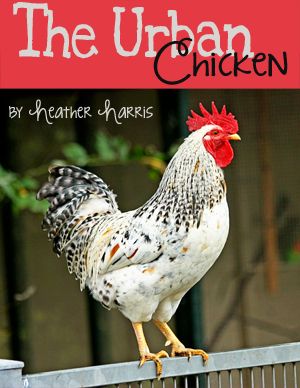
Hello everyone. I am really excited because on November 11th The Rural Economist will be celebrating its one year anniversary. We posted a few things before that time, but that is when I really got serious about sharing my projects, thoughts, successes, and failures. I am also excited because we will be offering our first giveaway. Heather at thehomesteadinghippy.com did an excellent job of putting together a very good book for someone who is thinking about getting chickens for the first time. 

Heather covers different laying breeds and the most popular meat chicken breed. She covers both chicken coops and chicken tractors with the pros and cons of each. She shows pictures of a chicken run that she made out of pvc (which makes me proud that I was not the only person who made their chicken housing out of that stuff).

Heather includes a recipe for homemade chicken feed and talks about the benefits of giving the chickens a chance to free range at least part of the day to help reduce feed costs. I really like being able to move my chickens around, though I will admit it has been a while since I have done so.

The chapter that impressed me the most was the chapter on How to Cut Up Your Chicken. Heather has included a step by step with very good quality photos. If you will follow Heather's instructions you will be cutting up your frying chickens like a pro in no time. (Do not get frustrated if the first couple of times does not turn out so well, that is normal.) 

Heather covers preserving your meat birds as well. She goes over the basics of freezing and canning the meat. She also includes several recipes.  Heather did an excellent job. This ebook is worth several times more than the $3.99 that she charges.

Now for the best part. Heather has given me permission to give away three copies of this eBook for The Rural Economist anniversary. There are three ways to have the opportunity to win this eBook. (1) Follow this blog by clicking the Join This Site button and leave a comment on this post. (2) Follow The Rural Economist on Facebook by clicking HERE. Then find the post about this eBook being given away and post my tagline. It is easy to figure out here is a hint it will be in italics. This eBook is a great recourse to help you....

Keep It Rural

Remember these ebooks will be given away by random draw on November 11th. I will announce the winners both on Facebook and here.

There is a contest running between homestead bloggers. If you like The Rural Economist you can vote for us here. Just find The Rural Economist and click "like" Thanks.


Summers Acres: The Good Neighbor Blog Hop

The Gardening Notebook a Review and Giveaway

The Gardening Notebook

Angi Schneider of www.schneiderpeeps.com, www.thegardeningnotebook.com, and www.thebusymomsguide.com is offering this wonderful ebook giveaway to help celebrate The Rural Economist's one year anniversary. As you can tell by the list above Angi is a very busy lady so I am honored that she thought enough of The Rural Economist to do this for all of you and for us as well.

This book is a real workhorse if you are planning to have a garden or just want to make your garden better each year. What Angi has done is make a easy and logical way to track your successes and failures. 

Angi has included several suggestions on how you can start working your way toward being more organic, how to keep weeds down in the garden, composting, saving money, and even what plants you should not plant close to each other, as well as what plants benefit each other by planting close.

For each plant Angi included in the book she has included tips as to what helps that plant grow best and covers the common pests and how to deal with these pests. The Gardening Notebook is designed as a tool with printable pages that should be kept in either a folder or three ring binder. This means the longer you use it the more valuable it becomes. 

Now for the best part; not only has Angi allowed me to give away two copies of The Gardening Notebook to celebrate our anniversary, she has also extended a 30% discount to all of The Rural Economist's readers. If you decide to buy The Gardening Notebook please realize that the 30% discount will expire on November 13th. Please follow the link below to purchase your copy and use the discount code RURAL at checkout to receive your 30% discount.Click here to visit Angi Schneider. This book normally retails for $9.95 but until November 13th you can get this eBook for only $6.97.What a deal!

If you would prefer to try to win a copy of this eBook first there are two ways to enter. (1) Follow The Rural Economist by clicking the Join This Site button and leave a comment on this post. (2) Follow The Rural Economist on Facebook by clicking HERE. Comment on the post about this giveaway with the tagline which I include on every blog post I make. Here is a hint- it will be the only thing in italics.

This book will help you keep a better garden which will enable you to....

Keep It Rural

Remember the giveaway will be November 11th. I will post the winners on here as well as on Facebook. The discount code is now active and will expire on November 13th.

There is a contest running between homestead bloggers. If you like The Rural Economist you can vote for us here. Just find The Rural Economist and click "like" Thanks.