Wednesday, August 6, 2014

Getting Prepared for Beginners #14 Building Community and Helping Others


Where one will fall two shall stand, a three ply rope is not easily broken.
Paraphrased from Ecclesiastes 4:12

At first look this doesn't seem like a preparedness topic but it very much is. There is an old Chinese proverb the states "The best time to plant a tree is 20 years ago, the second best time is now." This is true about a lot of things and very much true about building community.

Everyone has heard someone say that if something bad happens they are going to go off on their own or with their family and everyone else will have to fend for themselves. The lone wolf will not stand for long. If you will honestly think about wolves culture you will know this is true. The lone wolf doesn't last long. In order for a wolf to survive for very long they must be a member of a pack. People turn on outsiders quickly and unless you are a hermit you need social interaction.

Building Community

Building community is one of my biggest challenges. I can talk to anyone once a common interest is found. The initial conversation is what I find tough. Thank God for my wife. She can talk to anyone. Just getting to know your neighbors is a good start. Even opportunistic scum are less likely to steal from someone that they know by name. Just the act of knowing the people in your area increases your security. It does this in at least 3 ways. (1) Everyone knows you. It really helps if you are at least friendly. (2) People tend to look out for people they know. (3) Getting to know the people that are around you creates a loose feeling of teamwork.
Creating relationships in your community does not have to be difficult and you do not have to become best friends with your neighbors for there to be a sense on mutual benefit.

We added honeybees this year. Lots of people are afraid of bees. Some have good reason because they are allergic. Others fear is just due to lack of knowledge. Once we harvest honey we will take a small jar to our neighbors on either side of our property. This creates goodwill. People don't mind things if there is some perceived benefit to them.

Building community does not have to be limited to proximity. There are lots of groups on social media where ideas, victories, and challenges can be shared. Online communities are great but cannot take the place of people in your area. Get out there and get to know the people around you.

Helping Others

Helping others is related to building community but it is not the same thing. Helping others does not have to be preparedness related, but it can be. Being prepared is not just about yourself and your family. Keeping a set of jumper cables and using them to jump a strangers car off or helping someone change a tire is helping others. This builds your standing in the community. Each time you help someone in your community no matter how small the help they will tell someone how nice you were. If some thing bad happens your community will need a leader. Every event must have a leader. Someone who has proven their willingness to help. If you put in that effort before anything happens you could be that leader. No one should wish to be leader to lord over people but to be a helper the way leaders are supposed to be.

If I could have my wish in every town and neighborhood someone or a group of someones would stand and be the voice of reason in their own communities. Don't wait on or rely on the government. I know it sounds cliche, but be the change you want to see. It is true. Each person can make a difference in their own neighborhood. 

One Step Further

If you would like to take the extra step. You can work toward creating a group of people that have mutually agreed to help each other out. This can be done by simply getting to know people and exchanging phone numbers. Have the understanding that if a person cannot answer the call for help this time that is okay. We all have busy lives and cannot answer every time, but we should answer when we can.

This group of people, dedicated to the well being of each other can be a loose understanding or can be structured. A structured group is some times called a MAG. MAG stands for mutual assistance group. Some MAGs even have gone so far as to have bylaws. The choice is up to you.

My wife is much better at meeting new people than I am but it is something I am working on. I hope you will work on it as well.

Together we can build our 
Rural Dreams and Homestead Wishes

Subscribe to our mailing list

* indicates required


You can like The Rural Economist on Facebook follow on The Rural Economist on Gplus. Or you can even follow The Rural Economist on Pintrest. We now have a YouTube channel and are doing a series on wild edible and medicinal plants. Hope on over and check them out, oh and don't forget to subscribe.

Tuesday, August 5, 2014

Every Family Should Can


I have been doing a fair bit of canning the past couple of weeks. I want to do a lot more. Canning is kind of a family tradition. I cannot remember when I had my first experience with canning. As long as I can remember when harvest time arrived the whole family would get together. It didn't matter if we were harvesting corn, peas, beans, or whatever the whole family was there.

The men would pick whatever we were harvesting. As we filled bushel baskets they would be taken to where the ladies were waiting. They would start shucking, shelling, or snapping.

Once everything was picked, we would start the shucking or shelling or whatever. The ladies would move to cooking and canning. We basically had an assembly line and once one task was done everyone shifted down. At some point everyone did every job. There were no men's and women's jobs, just jobs. Good thing I was raided that way. I have seen my dad, mom, and grandparents all can something.

I am the primary canner in my family now. So far I have canned jams, stewed tomatoes, and vegetable soups. Canning is a great way to preserve what you harvest. Canning can be used for more, much more.

You can can anything that comes out of your garden. You can can meats, leftovers, even take things you buy at the grocery and combine them into something more usable. The equipment you will need depends on what you intend to can.

Basic Equipment

For high acid foods, vinegar based foods like pickles, and sugared fruit preserves, jams, jellies, syrups and the like all that is really required is a water-bath canner. Basically a large deep pot. Helpful equipment includes a funnel, jar lifter, a lid magnet, and a rubber spatula. Oh and of course you need the canning jars. Several name brands are out there. Just pick one you like. So far I haven't had any problems with any that are labeled for canning.


I have made a funnel out of a 3 liter soda bottle that I cut and washed. You can sometimes improvise some of the equipment. Just remember everything must be clean.

For low acid foods like beans, peas, meat, and really everything else you will need a pressure canner. I have included a link to a pressure canner like I have. It works great, but I am saving up to buy a pressure canner that can take 1/2 gallon jars. Yup, I said 1/2 gallon jars. With my family I need larger size jars. I have made jam in the little 1/2 pint jars. Each jar only lasted one meal. I do not can anything smaller than a pint now.


Getting Started

If you have never canned before start with something you have on hand. Tomatoes are probably the easiest thing in the world to can, but jams are pretty easy as well. We have had a fairly good year when it comes to tomatoes.

To can crushed tomatoes all you need is your jars, a water-bath canner, salt, pepper, a knife, and time. If you want to peel the tomatoes first you can, I usually don't. I just core the tomatoes, remove any soft spots, and cut them up. I place all of the tomatoes in a large pot and start cooking them. Salt and pepper to taste. While tomatoes are cooking sterilize jars and put lids in a pot of water. Warm up lids to just below boiling.

There are two ways that I have used to sterilize jars. One, place in a large pot and bring to a boil. Allow jars to boil for one minute. Two, place jars in oven heat to 200 degrees for a minimum of 5 minutes. Either method works fine. Lately I have been using the oven method most often because it keeps the stove eyes open for other steps.

Cook tomatoes until done. I taste mine for seasoning. Take sterilized jar fill using funnel to within 1/2 inch of top. Place lid and finger tighten band. FINGER TIGHTEN. If you tighten the band too much before the next step your jar will not seal properly. The band has to be loose enough to allow air to escape your jar.

Place jars in water-bath canner. Make sure to have at least one inch of water above the top of the jars. Bring water to a boil. Reduce heat just enough that the water continues to boil, but it does not boil over. Process for 10 minutes. Cut off heat and remove jars from canner with the canning tongs. Sit them on the counter to cool and listen for the "plink". Some may plink as soon as you take the jars out of the water while others may take hours. Once you hear that plink you know your jars are sealed.

Vegetable Soup

I am including my vegetable soup because I was specifically asked to do so. An honor no doubt, but also a little unnerving. Unnerving because my vegetable soup is never the same twice. I use whatever I have. One time my soup may have okra or even peas in it the next time not, just as an example. There are some staples in my soup though. A very heavy tomato base. I am talking crushed or diced tomatoes and lots of them. Corn, beans (could be lima, butter, or pinto), green beans, carrots, potatoes, and onion. 

Vegetable soup can be tricky. Either all the ingredients have to come in at the same time or you have to can in stages then used canned ingredients and recan. There is also a way to cheat depending on what you have planted.

I cook all ingredients until they are completely done. I have eaten a bowl while canning. While cooking I get everything ready as I stated above. Fill jars to within 1/2 inch of the top. Center lid and put on bands finger tight. When you feel resistance stop.

Here is where I deviate from the Ball canning book. The Ball canning book is like the Bible of canning. Ball says to use a pressure canner. Since I prefer to can vegetable soup in 1/2 gallon jars and don't have a pressure canner that is large enough to accommodate 1/2 gallon jars. So I use a water bath canner. Please note I am not suggesting you do so. I am just telling you I do. I process vegetable soup for 20 minutes. After 20 minutes I remove from the canner and wait for the Plink.

There is a cheat. If you have lots of tomatoes and you do not want to have to can and recan you can use frozen or even canned mixed vegetables you buy from the grocery. Use what you have and buy the rest. It will be a lot better than anything you can buy. If you are going to use canned veggies with your tomatoes, I suggest buying the big gallon cans, but that also depends on how many tomatoes you have.

If you are new to canning or want to expand your knowledge make the investment and buy the Ball Complete Book of Home Preserving. It is well worth the cost and you can always tweak the recipe, I do.


I hope you enjoyed this little venture into canning. Guys I hope you see you can do it too. This should be something the whole family does. Canning will help you make sure you have a full tummy and a healthy body, because you know everything that goes into your home canned foods. Now if you will excuse me, I have apple jelly to make.

I Wish you Rural Dreams and Homestead Wishes.

Subscribe to our mailing list

* indicates required


You can like The Rural Economist on Facebook follow on The Rural Economist on Gplus. Or you can even follow The Rural Economist on Pintrest. We now have a YouTube channel and are doing a series on wild edible and medicinal plants. Hope on over and check them out, oh and don't forget to subscribe.


Affiliate Link Disclosure: The post contains affiliate links. I may receive compensation for links, endorsements, testimonials, or recommendations for any products mentioned on this blog. Any time you use one of our links for Amazon, if you purchase something The Rural Economist receives a small commission and it doesn't cost you any more. Even if you do not purchase the items I list. In this way you will help support us trying to teach people about self reliance and homesteading. Thanks for your consideration.  

Monday, August 4, 2014

Water Brick Giveaway

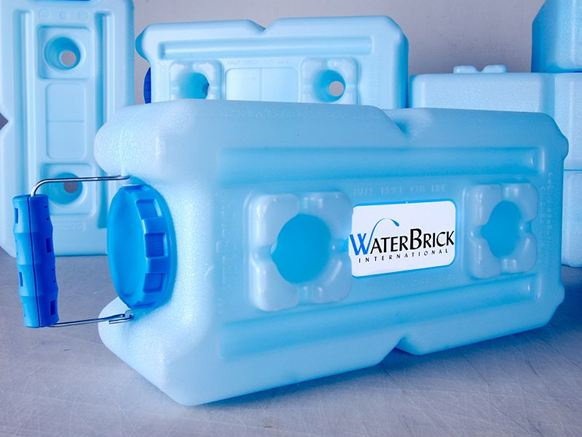
I am super excited about being a part of this giveaway. I got together with a group of my blogging colleagues to share this giveaway that is sponsored by Food For Health. We are giving away an 8-Pack of WaterBricks to one lucky winner. That is right 8 3.5 gallon water bricks to one person. That is 28 gallons of water storage. Water should be very high on everyone's preparedness list! Enter for a chance to win!
WaterBrick Giveaway WaterBrick Stackable Water and Food Storage Container: 3.5 Gallons of Liquids or up to 27 Pounds (264 Adult Servings) of dry foods. Made of rugged, high-density polyethylene (HDPE with an easy grip comfort handle. Better than Other Bulk Storage Drums or Tanks: WaterBricks stack like bulk storage but are individually easy to move for Grab & Go taking your water where you need it. Compare WaterBrick to typical filled 55 gallon drums or tanks that are impossible to move or take with you if you are forced to leave your home during an emergency.

Here are the bloggers involved in this giveaway:
1. Food Storage Moms
2. Are We Crazy Or What?
3. Home Ready Home
4. Survival For Blondes
5. The Rural Economist
6. Mom With A Prep
7. Imperfectly Happy
8. Fabulous Farm Girl
9. The Survival Mom
10. Prepared-Housewives
11. Food Storage and Survival
12. Whole New Mom
13. Prepper Website
14. Madtown Preppers
15. Mama Kautz
16. Apartment Prepper
17. Timber Creek Farm
18. Preparedness Mama
19. The Backyard Pioneer
20. The Busy B Homemaker
21. Trayer Wilderness
22. Common Sense Homesteading
23. Sharing Lifes Abundance
24. Survival At Home
25. Five Little Homesteaders
Learn more about or purchase a WaterBrick here

a Rafflecopter giveaway

This giveaway is sponsored by Food For Health and the following rules apply: One winner will be chosen and that said winner will have 48 hours ro reply to the email that is sent to them. Please check your SPAM folder. If the winner does not respond within the 48 hours another winner will be chosen. This giveaway is open to anyone who is 18 years of age or older and must reside in the 48 Continental States. We will only ship to the 48 Continental States. This giveaway starts on Monday August 4th at 5:00 am (MDT) and will end on August 10th at 5:00 pm (MDT). Good luck to everyone!

I wish you
Rural Dreams and Homestead Wishes

Subscribe to our mailing list

* indicates required


You can like The Rural Economist on Facebook follow on The Rural Economist on Gplus. Or you can even follow The Rural Economist on Pintrest. We now have a YouTube channel and are doing a series on wild edible and medicinal plants. Hope on over and check them out, oh and don't forget to subscribe.