Showing posts with label cooking wild game. Show all posts

Monday, October 5, 2015

Dove Hunting: Blog Post and Podcast Episode


In our area dove hunting is the first real season to open up. It has been a tradition in our family for decades to go out at least on opening day and get into the swing of the hunting season.


 Some General Information on Mourning Doves

I have found that if I am going to effectively hunt something it is best if I know a little about the quarry. The mourning dove is considered a migratory bird even though they live and breed in the majority of the US. They are seed eaters and are quite agile in flight. Doves can reach a maximum speed of 55 miles per hour while in flight and can preform some fairly impressive evasive maneuvers.
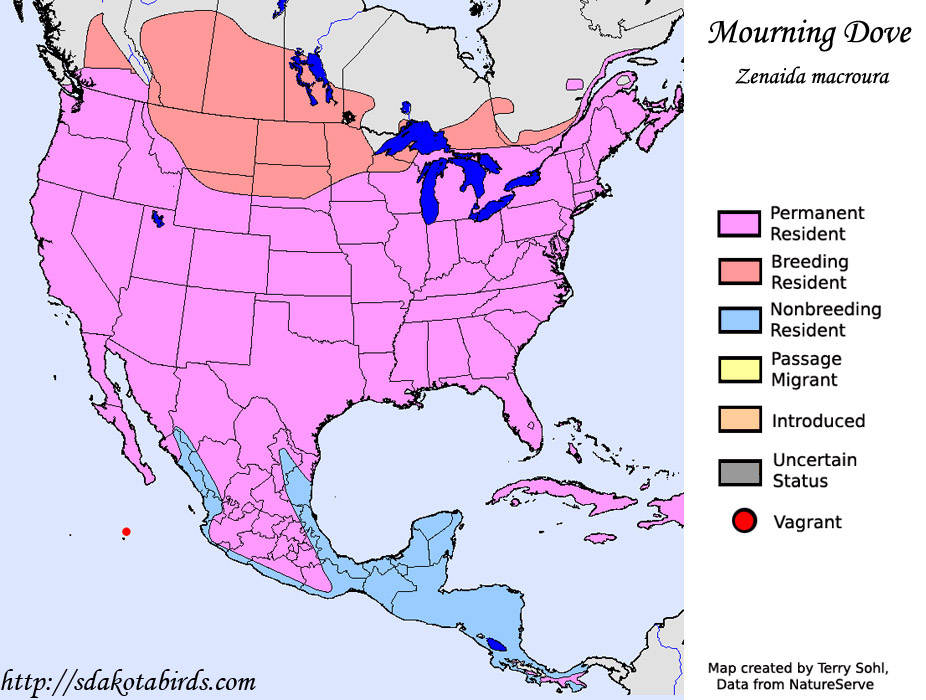


Since doves are migratory they have a dark meat. Dark meat in a fowl occurs when that muscle is used a lot. In chickens, quail, and turkeys the dark meat is in the legs and thighs because they are primarily ground birds. Doves, ducks, and geese are primarily flight birds so their breasts are also dark meat. This can present a challenge for someone trying to cook them for the first time. If you try to cook dove the same way you would cook chicken, the end result will be something close to shoe leather. Dark meat also has a stronger or more intense taste that some people call gamey. 

Hunting  Doves

Before you go hunting doves there are some things you should know.

Hunting License

Every state in the US requires some type of hunter education course. Most have a grandfather clause, what this means is that if you were born before a certain date you are not required to take the course. For example I am exempt from the hunter education course here in Alabama. For a good overview of the hunter education requirements in all of the states you can visit the International Hunter Education Association. This site provides enough information to get started.

After you have completed the required hunter education course you can then purchase your hunting license. The cost of this license will vary by state. Most states have a way for you to purchase your license online and just enter a reference number from your hunter education course. A survey is likely to pop up that deal specifically with migratory birds. On this survey you will be asked about last years harvest of migratory birds. You will need to check the appropriate range number of the birds you harvested last year. If you didn't hunt, just click the did not hunt button. After this some states ask if you intend to hunt this year, click the appropriate box.


Firearm Restrictions

First you are going to want to use a shotgun. I am not saying that there aren't a few people out there that might be able to hunt dove with a rifle, but I haven't met any yet. My suggestion is use a 20 gauge or larger.
Note: On shotguns the lower the number the larger the shell. i.e. a 12 gauge is larger than a 20 gauge.
For doves I suggest either 7 1/2 or 8 shot shells. Shot is the projectile inside the shell, the higher the number the smaller the shot, but smaller shot means more pellets inside the same shell. Remember doves can fly 55 miles per hour.

While hunting all migratory birds your shotgun has to be restricted to a maximum shell capacity of 3. That is one in the chamber and two in the magazine. This goes for semi automatic as well as pump shotguns. I hunt with a Remington 1100. I love that gun. It has a normal carry capacity of 5, one in the chamber and four in the magazine. I have to plug my shotgun so it is legal to hunt with for migratory birds. A shotgun plug can be purchased or made. The plug I use was whittled by my great grandfather, I have used it for 35 years. If you are going to hunt any migratory bird get a plug, it is not worth the risk or the fines.

Learning the Trade

If you are an experienced shooter but have never hunted doves, it will take a little getting used to. You have to learn to gauge the birds speed, flight path, distance, and how much to lead the bird for the shot. 

Note: Leading a shot is actually shooting in front of the target so that the projectile and the targets location coincide in the fraction of a second between the time you pull the trigger and point of impact.

If you are not an experience shooter I strongly encourage you to find a gun range that has sporting clays. There are several clay throwers that will mimic the flight pattern and speed of a dove. This will help you a ton. I have seen people shoot in excess of 100 rounds to harvest less than 15 birds.

Bag Limits

You are allowed to harvest 15 doves per day with a maximum of 45 in procession in a 90 day period.  What does this mean? This means you are allowed to kill 15 birds each day. If you are at a hunting camp and have the cleaned birds on ice, you cannot have more than 45 birds per hunter. This ensures that there will be plenty of birds to hunt for years to come.

Cleaning Your Birds

 Cleaning doves is really easy once you learn how. After just a bit of practice you should be able to clean a dove in around a minute each. The thing to remember is you are going to be skinning these birds, not pluck them. There isn't enough fat to merit plucking. The only part of the dove that I cook is the breast because it is the largest piece of meat. I save the organs like the heart and liver for fish bait. They are the perfect size bait for bluegill and perch. I will be making a video on cleaning dove after my next hunt. The remainder is fed to either the dog or the cats.

Cooking Your Birds

Like I have already said above, you cannot cook dove the same way you do chicken. Cooking too long or a too high heat will result in the meat being tough. One of the easiest ways of making sure the meat doesn't get tough is by boning the meat. This will reduce cooking time and will help keep the meat more tender. You can also use a bring or a marinade on the meat, this will seal the pores of the meat and keep moisture from escaping as easily. A lot of people wrap the breasts in bacon, this adds fat that will help the meat stay moist. Here are some recipes for cooking dove.

Crockpot Dove Dumplings

10 - 12 de-boned dove breasts
8 cups Chicken broth
salt, pepper, and garlic powder to taste I start with 1/2 tsp of each
2 rolls canned biscuits (I use canned biscuits because they are quick, you can use a comparable amount of homemade biscuits, I have done so myself)
1/4 cup butter
8 ounces sour cream (optional)
1 Tbs all purpose flour

Soak dove breasts in brine solution of 2 Tbs salt per quart of water for 4 hours. Take dove breasts out of solution and dry with paper towel and cut into bite size pieces. Place everything except biscuits in crockpot on high for 1 hour. At end of hour cut up biscuits and add to crockpot, cook for at least an additional 4 hours on low heat. Serve in bowl.

Want to download this recipe?

Baked Dove

8 - 10 dove breasts bone in
2 slices bacon per dove
salt and pepper to taste

Soak dove in brine solution of 2 Tbs salt per quart of water for 4 hours. Take dove out of solution and dry with paper towel. Salt and pepper dove lightly and tie bacon around each dove. Bake in preheated 300 degree oven for 30 - 45 minutes.

Want to download this recipe?

Here is one more recipe from a friend and fellow blogger Pan Fried Dove Appetizers 

There you have it. This is the first full blog in conjunction with a podcast. I would like to know what you think, should I do more like this? Get out there and enjoy God's creation while learning skills that will make you more self sustainable and good hunting.

Bringing Rural Back

Subscribe to our mailing list

* indicates required


You can like The Rural Economist on Facebook follow on The Rural Economist on Gplus. We now have a YouTube channel and we cover all sorts of things. Hop on over and check them out, oh and don't forget to subscribe. I have just joined Instagram if you would like you can follow us HERE. We will be sharing several things over the next year, I hope to see you there. 

Check out The Rural Economist on Pinterest

Affiliate Link Disclosure: This post may contain affiliate links. I may receive compensation for links, endorsements, testimonials, or recommendations for any products mentioned on this blog. If you see something you are interested in, check them out. Thanks for your consideration.

Thursday, September 18, 2014

Meet the Homestead and Preparedness Writers Stacy with Game and Garden


For this week's interview I am super excited to have someone from my home state. Stacy with www.gameandgarden.com is very widely published and highly educated. She left a career as an attorney to live a simpler and more sustainable life. I do not know if she has read my blog at all, but if she hasn't we are "preaching" the same message about not being motivated by fear.

I would like to point out that Stacy is the only one so far who has refused to answer how old she is. That is fine, I just found it funny. I tell all of the writers I interview that if they do not want to answer any of the questions I send them to just leave them blank and I will delete them. 

I really enjoyed getting to know Stacy and I think you will too. She has a lot of good things to say.

Do you consider yourself a prepper, a homesteader, or a mixture of both?


I don’t really consider myself in any particular category, but by default, I probably fit the mold for both and more. I believe that all thinking people that aim to live a healthy, abundant, quiet life will have many of the characteristics of a prepper and a homesteader. It is just common sense that we need to be prepared for disasters, grow our own foods or get it from reputable farmers, eat honest pure foods free from added hormones, genetically modified organisms, and to be as self-sufficient as possible so that we can help others. I have been making this my ambition for the past 20 years.

I am a prepper to the extent that I believe it is only wise to be on the watch at all times and to be prepared for future events, good and bad. They will both come. My step-dad was a Green Beret and taught me self-defense, to be aware of my surroundings in parking lots, schools,…everywhere. With the world changing today, this is a must. We should NOT be motivated by fear, but not we should not walk around with our heads in the clouds either. As for disasters, they happen all the time. We had a stint in Alabama about 15 years ago where there was no power for up to a month. Preparation for this kind of disaster will save a lot of heartache when disaster hits, and it will hit.

I certainly fit the bill as a homesteader, but never really set out to be a homesteader.I suppose you could call me an accidental homesteader. One of the reasons is quite simple. Fresh food tastes better and is more healthy. I know their are more added reasons to be a homesteader such as being self-sufficient (which I love), but everyone in the world will agree with that statement. It only seems natural to grow and harvest your food yourself. The two go hand in hand. Throughout the years I have increased the size of our garden to suit the size of my family, developed a hydroponics system with the help of my husband and boys, raise chickens and bees, have an outdoor oven built of clay, sand, and water (incredible fun and great food to boot!), use compost for fertilizer, and love wild edibles from our foraging adventures. 


On your site you state that you left a career as a lawyer. What were the reasons for making that decision, especially when popular convention states that everyone should pursue a career?


Popular convention also says, “Make as much money as you can”, but true worth isn’t wrapped up in what you have in the bank. Practicing law is a very important job, but being a wife and mother is more important. Although some women may be able to do both, I couldn’t give my all to my clients and my all to my husband and children at the same time in my life. I already had a baby when I graduated law school and once I had my second child, I needed to focus on caring for my children.

The world’s definition of success is far different than true success. "And what do you benefit if you gain the whole world but lose your own soul,” or to me my children’s souls. My place was at home. I continued to have more children and they needed me there. I also wanted to learn how to produce healthy tasty meals, how to inspire creativity and hard work in my kids from an early age, and tend to my husband’s needs.

I am now able to do more “in the world” than I was able to when I had all small children and my older kids help a ton (and enjoy it) which enables me to share the things I have learned along the way. 

What do you think the greatest challenge our society faces?


I believe apathy is a very real and great challenge in our society. The moral fiber in our society is being torn to shreds and at times seems to have to be legislated which ties the hands of those of us desiring to make a difference. Our freedoms and rights are gradually being overtaken and “we, the people” sit idly by allowing it to happen. I think people aren’t finding motivation and purpose in much of anything. I also feel that people have given up on having their say in the government and their communities. We need men and women to stand up for the freedoms that America was founded upon. We need people to CARE and feel that their vote means something; that THEIR VOICE MATTERS. I am beginning to sound like a politician, but we are all politicians because we DO have a say…WE NEED TO SAY IT.


You have chosen to home educate 7 children. Can you tell us why you made that decision and some of the challenges of home educating your children? 


While my oldest children were still babies, I was reading about home education. Quite frankly, I had a hard time with the fact that I was going to miss the best parts of the day with my kids. I really wanted to be with them when they were at their best and I was my best. I wanted conversation in the mornings, work and school mid-day, walks in the afternoon, dinner preparation in the evening, and so on without being rushed.

As far as education is concerned, my husband and I feel that all of life is education.For instance, children learn math, genetics, basic science, chemistry, history, reading, and horticulture from gardening. How many asparagus plants do I plant for a family of 9? What is the origin of pumpkins? Why are there so may varieties of pumpkins. All learning leads to more learning.

I wanted to teach the kids everything that I know as well as learn with them a life of self-sufficiency that would give them the confidence to overcome problems, excel in life, and enable them to share with others. I would have missed so many opportunities for sharing my knowledge, my struggles and how I overcame them, and so much more had we not homeschooled. I am sure there would have been other opportunities had they participated in the traditional form of education, but I am quite sure we made the correct decision to homeschool.

There have been challenges to home educating as there is in most everything worth anything. For me, managing my time and the time of my kids has been a challenge. There is so much work in the home, in the gardens, and life interruptions that a clear schedule needs to be attended to. The schedule has changed every year with the addition of children, or as of late, two of my children graduating and entering college.

Another challenge has been home educating different ages with very different learning styles and interests. I believe that each person has a certain bent that needs to be developed, therefore, my teaching is very individualized to each of my students. Time management is a must! By nature, I am not a very organized person, but homeschooling has certainly forced me to become more organized. I have to admit it is still a struggle, but a discipline that I am leaning and get most excited about sharing with other moms.
 

On your site you talk about learning to prepare wild game and how at first you were not a fan. How did you begin to change your opinion of wild game?


My husband is an avid outdoorsman and quite the cook. He loves great food. For the life of me, I could not figure out how to make venison taste as good as the beef from the supermarket. I wanted to please the “hunter gatherer” side him as a newlywed, therefore I began searching ancient recipe books on how to cook meat. The meat that our ancestors cooked was what today we call “wild” or “free-range, organic” meat. As I studied and mastered the ability to cook wild game, I began to understand how the flavor was developed from the fact that it was free-range. The health benefits were evident to me and I determined that I could control much of my health by my control over my food source. From then on, our family has made it our ambition to harvest and “put up” as much of our food as possible for optimal health. This is where my first book,Happy Healthy Family Tracking the Outdoors In, comes in. I wanted to make it easy for others to cook wild game, and free-range/organic meats and fresh vegetables as possible. That is what the book is all about.

What are some tips you can give to those who are hesitant about eating game? My wife is not really thrilled about eating what I harvest either. With wild game, it is all in the preparation. To extract the best flavor and texture (not gamey or though), you will need to treat each animal and cut of meat a particular way. In my book, Recipes and Tips for Sustainable Living, I give you a chart on how to treat each cut of meat as well as a substitution list for meats you don’t have available. If prepared correctly, you are going to treasure the wild meat any day over the farm raised unless of course it is raised as God intended - without unnecessary added hormones, GMO’s, and antibiotics. 


You are quite widely published. Tell us a little about which of your books you think would be the best starting point.


I will tell you a little about each book and let you decide. Photographs are very important to me in that I am a very visual person. All of my books have a photo accompanying any subject or recipe.

Happy Healthy Family Tracking the Outdoors In is my first book written to encourage people to cook wild foods for their family as often as they get the chance to do. I also have wonderful vegetables and salads and a few tips on growing your own vegetables.

Recipes and Tips for Sustainable Living is my latest book and gives tons of tips for growing heirloom vegetables, herb pots, saving seeds, raising chickens and bees, composting, as well as tons of great recipes using the vegetables, fruit, chicken, eggs, and game that you harvest.

My DVD,Gourmet Venison, takes you through 15 venison recipes, some of which can be found in my book, Recipes and Tips for Sustainable Living. I take you through every step of each cut of venison and how to make it tender and succulent. 

Which magazine publication did you enjoy doing most?


I have loved every one of them. I know that sounds crazy, but they have all come from different angles and have shown the truths of how I live and why. I am just as excited and honored every time I do a magazine, tv, radio, or blogger interview. Each article takes on a different personality because each interviewer has a different personality. It is really quite enlightening.

Did any of your family members try to discourage the lifestyle you have chosen?


Not at all. We have always lived a little outside the box, but really there is nothing tremendously unusual about our lifestyle. Almost everyone back in the 1950’s had a kitchen garden and a few chickens running around in the back yard, canned overflowing vegetables for future use, and bought local honey from their neighbors. Food has always been a big part of life. Only recently have people entrusted large supermarkets for their sustenance and trusted the government to take care of them. 


What do you think your best asset is in helping others achieve self sustainability?


I want to encourage people to start where they are. You don’t have to own 50 chickens, a few cows, bee hives, run a top notch garden, have a composting bin right now. Learn a little and put it into practice. Learn a little more, put it into practice. Enjoy the process and soon enough you will be pretty well self-sufficient or at least locally-sufficient. I think my gifts are mostly to inspire and teach and make it as EASY as possible for people to get started and finish with pride. My books are full of EASY tips about living sustainable, eating wild, preparing beautiful delicious foods. 


If you could tell everyone one thing what would it be?


Be thankful. Find joy in living the day to day mundane as well as the exciting times. Put your sufficiency in Christ because no matter how much you prepare for the future, you are not completely in control. This is an ongoing lesson in my home. No matter what the situation, if you can give thanks, attitudes change and you will make better decisions. Take nothing for granted. 

I hope you enjoyed getting to know Stacy with www.gameandgarden.com. When you drop by her site please tell her The Rural Economist sent you.

Stacy is just one of the many writers who are trying to help you achieve your
Rural Dreams and Homestead Wishes

Subscribe to our mailing list

* indicates required

You can like The Rural Economist on Facebook follow on The Rural Economist on Gplus. Or you can even follow The Rural Economist on Pintrest. We now have a YouTube channel and we cover all sorts of things. Hope on over and check them out, oh and don't forget to subscribe.

Affiliate Link Disclosure: The post may contain affiliate links. I may receive compensation for links, endorsements, testimonials, or recommendations for any products mentioned on this blog. Any time you use one of our links for Amazon, if you purchase something The Rural Economist receives a small commission and it doesn't cost you any more. Even if you do not purchase the items I list. In this way you will help support us trying to teach people about self reliance and homesteading. Thanks for your consideration.